RMG ban to hit celebrities hard as ?200-300 crore endorsement deals vanish overnight
Posted on 2nd Sep 2025
The Promotion and Regulation of Online Gaming Bill 2025 has erased crores in endorsement deals, shuttered ad campaigns, and triggered losses across cricket, Bollywood, influencers, and ad agencies
source: e4m
India’s sweeping ban on real-money gaming has pulled the rug from under some of the country’s most bankable celebrities. Cricketers, Bollywood stars, and influencers who until last month were fronting multimillion-rupee endorsements for fantasy cricket, poker, and rummy apps —have lost one of their biggest paymasters overnight. Celebrity managers estimate ?200–300 crore could vanish from endorsement deals alone, as contracts with actors, cricketers, and influencers get axed overnight.
According to Sandeep Goyal, Chairman and Managing Director, Rediffusion, the numbers speak for themselves: “Big blow for advertising. Performance marketing worst hit. Rs 5000 crore gone. Rs 1000+ crore gone from IPL; Rs 400-500 crore in agency retainers and fees. Another Rs 500-odd crore in film production and Rs 200-300 crore of celebrity endorsement fees — so the hit is pretty bad.”
Cricket’s Golden Goose Cut Off
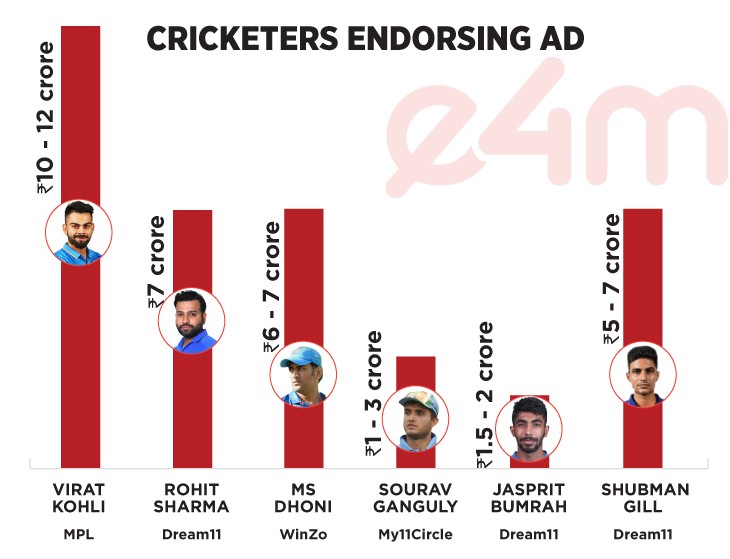
For Indian cricket, fantasy gaming platforms had become the biggest commercial backers. From Dream11 to My11Circle, these platforms were turning from sponsors to lifelines, if numbers are to go by.
As per industry reports, Virat Kohli, through his association with MPL, was making ?10-12 crore annually. Rohit Sharma’s Dream11 partnership, reportedly worth about ?7 crore, has been hailed as one of the most natural brand-celebrity fits in recent memory. MS Dhoni, the face of Winzo, also stood to earn ?6-7 crore annually.
While legends with diversified portfolios may weather the storm, the hardest hit are younger cricketers who had tied their early endorsement strategies almost entirely to gaming deals. For them, the ban erases both income and visibility.
At the institutional level, the carnage is even deeper. The BCCI’s ?358 crore Dream11 jersey sponsorship — which had redefined cricket’s commercial landscape — has already dissolved. Similarly, the IPL’s ?125 crore My11Circle associate sponsorship hangs in limbo. Industry watchers warn that the sport could see a ?8,000–?10,000 crore annual revenue wipeout, jeopardizing cricket’s financial ecosystem.
Bollywood Faces a Reckoning
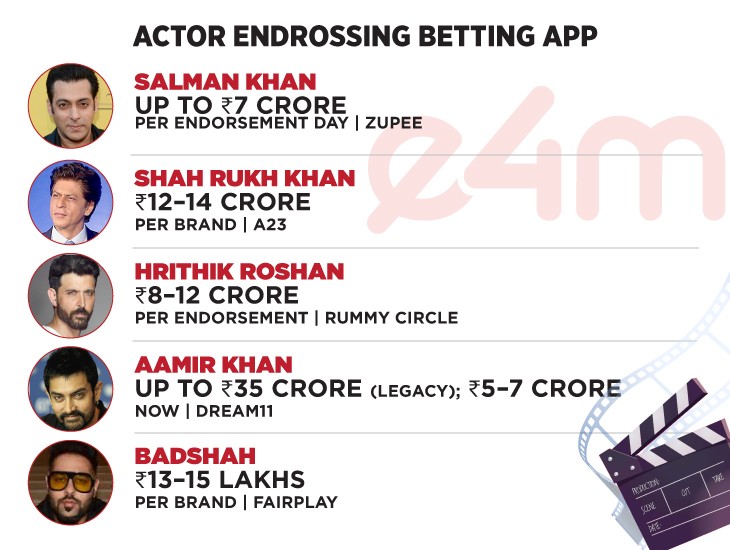
The fallout extends beyond stadiums and into cinema halls. Bollywood’s biggest stars, long courted by gaming firms, are watching a lucrative revenue stream vanish overnight.
As per industry reports, Salman Khan commanded up to ?7 crore per endorsement day with Zupee. Shah Rukh Khan’s ?12–14 crore tie-up with A23 is scrapped, while Hrithik Roshan loses his ?8–12 crore Rummy Circle contracts. Even Aamir Khan, who once commanded ?35 crore legacy deals, had settled into ?5–7 crore partnerships with Dream11 — now wiped out.
The ripple effect runs through the music industry too. Rapper Badshah is believed to have charged ?13–15 lakh per brand promotion through his association with FairPlay.
For India’s film and music stars, the gaming industry was a lucrative source of income. With those gone, the endorsement economy will be forced to recalibrate, possibly leaning toward fintech, luxury, and consumer goods to fill the void.
Taxman’s Shadow Over Past Winnings
If the revenue loss wasn’t enough, actors and influencers also face a regulatory minefield. Rishabh Gandhi, Founder, Rishabh Gandhi and Advocates, explained, “Any winnings from fantasy sports, rummy, poker or other money-based apps earned before the 2025 ban must be declared in your income-tax return. Such income is taxed at a flat 30% plus surcharge and cess, regardless of your tax slab. Platforms were required to deduct TDS at 30%, but you must still report the full winnings. If TDS was not deducted, you must pay the balance tax yourself. Winnings should be disclosed under ‘Income from Other Sources’ in the ITR. If you missed reporting earlier, you can file an Updated Return within the allowed time frame by paying additional tax. Full disclosure keeps you safe from future tax action.”
The warning is sharp. Failure to disclose could result in interest charges, penalties of up to 200% of tax due, and even prosecution. With all gaming transactions leaving digital trails, detection is virtually guaranteed. For celebrities who had enjoyed massive paydays from gaming campaigns, the pressure is now as much financial as it is legal.
Influencers Caught in the Crossfire
The ban’s most dramatic impact may be on India’s thriving influencer economy, which had become heavily reliant on gaming platforms.
Comedian Raavi Gupta was making up to ?8–10 lakh per collaboration with platforms like Junglee Poker.
Influencer Anurag Dwivedi, who called himself the “Face of Fantasy Cricket,” has himself said that he bagged ?10–15 lakh per month during IPL seasons — revenue that has vanished overnight. Afreen Rahat, who had promoted Winfair Cricket, and actress Karishma Tanna, who fronted campaigns for Adda52, are also left in the lurch.
According to a Qoruz report tracking real-money gaming (RMG) activity between January 2024 and January 2025, influencers made 34.8K betting-related posts. Some 10.7K creators promoted such platforms, generating 113 million engagements with an average engagement rate of 0.42%.
In terms of influencer tiers, 41.15% of posts came from micro-influencers, 28.21% from macro, 14% from nano, and 10.62% from mega influencers. Some of the most prominent names included Amit Majithia (27.9M followers), Neel Trivedi (64.5K), and Raghav Sharma. Platforms like Adda52 Poker, BBhai Book, MG Lion Net, WinBuzz, and Lotus365 aggressively pushed festive campaigns.
For some creators, gaming was supplementary income. For others, it was their bread and butter. The ban redraws the map of India’s influencer economy, forcing a sudden pivot to safer categories like fashion, travel, or fintech.
What Survives?
The law carves out one important distinction: e-sports and social/educational games remain legal. E-sports — skill-based competitive tournaments without betting — are untouched. Social and educational games may charge subscription fees but cannot involve stakes or prize pools.
For India’s millions of gaming enthusiasts, that means recreational play remains permissible. But for the multi-crore economy of real-money games, their celebrity endorsers, and the ad world that thrived on them, the curtain has come down.
The ban crumbles the pockets of cricketers, destabilizes Bollywood endorsement portfolios, disrupts digital creators’ incomes, and shreds advertising agencies’ pipelines. For a sector that had redefined Indian marketing in the last decade, the loss is staggering.